Free · in your browser · no sign-up
Golden Ratio Face Calculator
The golden ratio face idea says beautiful faces repeat the proportion 1.618. Upload a selfie and this calculator measures five classic facial ratios, shows each one next to 1.618 and how far off it is, and draws them on your photo. It is free and runs in your browser. Below we also explain why our own attractiveness score doesn't use the golden ratio.
The free test runs in your browser: your photo stays on your device.
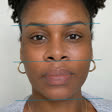 Example: 87/100 AI-generated face · see its full report
Drop a selfie here
Face the camera, arm's length away, even light, hair off the face.
Loading the face model (first time only)…
Tap a part to see its lines.
Measured from this photo's geometry, not a judgement of you. A second photo of the same face usually reads a little differently.
Your full report
Biggest opportunity:
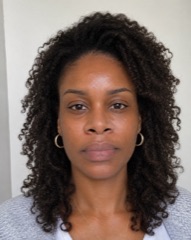
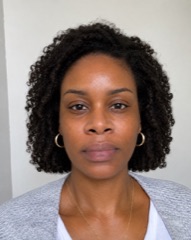




One-time payment. No subscription. 7-day refund if the report fails or is clearly wrong. See a full sample report
This is the sample face. See its full report, or test your own photo to unlock yours.
Why it scored this way
What to do about it
LockedWhat's in the full report
- OverviewOne-line verdict, your three strongest and three weakest measures, and a radar chart.
- ProportionsThirds, fifths, face length to width and symmetry, each placed against the typical range.
- Eyes and browsCanthal tilt, eye spacing, openness, and brow position.
- Nose and midfaceThe front-view ratios we can measure, and what a front photo can't show.
- Lips and jawLip balance, mouth width, jaw to cheekbone width, chin.
- SkinWhat the photo shows about surface tone, shine and under-eye shadow. Appearance only, never a diagnosis.
- Face shape and hairYour face shape, six haircuts that suit it, AI pictures of you with three of them, glasses frames, and beard styles for men.
- ColoursWarm or cool colouring and the clothing colours that suit it.
- Your planFive to eight changes ranked by cost, effort and how soon they show, with why the first one comes first.
The five ratios
| Ratio | What it compares | Our reference faces |
|---|---|---|
| Face length ÷ face width | Upper forehead to chin, against cheekbone width | 1.28 (1.17–1.42) |
| Mouth width ÷ nose width | Corner to corner of the mouth, against the width of the nostrils | 1.23 (1.11–1.37) |
| Nose base to chin ÷ lips to chin | The lower third, against the part below the lips | 1.55 (1.45–1.64) |
| Lips to chin ÷ nose base to lips | Below the lips, against above the lips | 1.84 (1.56–2.21) |
| Outer eye corners ÷ mouth width | Distance between the outer eye corners, against mouth width | 1.70 (1.48–1.98) |
Your result starts with the average distance from 1.618 across all five ratios, then lists each ratio with how far it sits from 1.618 (your ratio ÷ 1.618 − 1, as a percentage).
What we found in our reference faces
We ran the calculator on our 45 AI-generated reference faces, which lean towards conventionally attractive. Not one reached 1.618 for face length to width (the highest was 1.42) or for mouth to nose width (highest 1.37). The ratio that came closest on average was nose base to chin against lips to chin, at 1.55.
Part of the face-length gap is our measurement: the face mesh stops just below the hairline, so face length is a little shorter than a hairline-to-chin measurement. That is why the table above prints our reference averages alongside 1.618: they tell you what a typical face looks like with the same points.
Why our attractiveness score doesn't use the golden ratio
The steadiest finding in attractiveness research is that averaged faces, and real faces close to a population average, are rated as more attractive (Langlois and Roggman, 1990, Attractive faces are only average; reviewed by Rhodes, 2006). Studies that compared rated faces with 1.618 or the Marquardt phi mask (Holland, 2008; Kiekens and colleagues, 2008; Rossetti and colleagues, 2013) found little or no link with attractiveness, and none of our reference faces sat at 1.618 on the two best-known ratios.
So the attractiveness test scores how far each ratio sits from a typical range measured with the same points, not from 1.618. This page is here because people ask for the golden ratio; read it as a curiosity, not a beauty score. How our score works.
Limits
- One photo, one set of numbers: lens distance, expression and head angle all move the ratios. Close-up selfies push mouth-to-nose and face length down.
- Golden ratio calculators online use different points and different ratios, so their numbers won't match ours.
- Front-view ratios only. Profile proportions (nose, lips, chin from the side) need a side photo.
Photo tips
- Camera at eye level, at least an arm's length away. Close-up selfies make the nose look larger and the face narrower.
- Face the lens straight on with a neutral expression and your mouth closed.
- Soft, even light from the front; hair pulled away from the forehead, cheeks and jaw.
- Glasses off if you can. One face in the frame, and only a photo of yourself.
The full report
This page shows one measure. The full report reads every part of your face from the same numbers, describes your skin's appearance, colouring, hair and brows from a small copy of your photo (deleted within 2 hours), shows AI pictures of you with three haircuts for your face shape, and ends with a ranked styling plan. $14.99 once, no subscription, 7-day refund if it fails or is clearly wrong. What's in the report.
Questions
What is the golden ratio face?
The idea that a beautiful face repeats the proportion 1.618 (phi), for example face length about 1.6 times face width. It became popular through face masks and calculators online; research support for it is weak.
What is the golden ratio face test?
It measures facial proportions such as face length to width and mouth to nose width and compares each with 1.618 (phi). Here it runs in your browser from one front selfie and shows each ratio next to 1.618.
How do I calculate my face's golden ratio?
Choose a straight-on selfie. Your browser places 478 points on your face, levels the head, measures five ratios and compares each with 1.618. No ruler, and nothing is sent to a server.
What is a good golden ratio face score, and how close is an average face?
There isn't a meaningful score. Our attractive reference faces averaged between 4% and 24% away from 1.618, depending on the ratio. Being close to the reference average says more than being close to 1.618.
Does the golden ratio actually predict attractiveness?
Research support is weak. Studies comparing rated faces with 1.618 or the Marquardt phi mask (Holland, 2008; Kiekens and colleagues, 2008; Rossetti and colleagues, 2013) found little or no link, while faces close to a population average are consistently rated higher.
Is the golden ratio face test accurate?
The measurements are as accurate as the photo: sharp, straight-on photos give stable ratios. The idea behind the test is the weak part, which is why we don't use it in our score.
Why is my result different from another golden ratio calculator?
Each tool picks its own points and ratios, and some fit a mask by eye. Compare your numbers with our reference averages above rather than across tools.
Which famous faces match the golden ratio?
Lists in the news use their own methods and photos, and we don't rate other people. Try the calculator on your own photo instead.
More free face tests
- Attractiveness testOverall score and all five parts
- Canthal tilt testEye tilt in degrees, each eye
- Facial symmetry testLeft against right, midline drawn
- Face shape detectorOval, round, square, heart, oblong or diamond
- Jawline ratingJaw and chin width against cheekbones
- PSL scale testYour score on a 1–8 scale