Free · in your browser · no sign-up
Facial Symmetry Test: How Symmetrical Is My Face?
A facial symmetry test checks how closely the left side of your face mirrors the right. Choose a front-facing selfie and we mirror 26 pairs of points across your face's midline, then give you a symmetry score out of 100, the average left-right difference as a share of face width, the difference in eye tilt and the width balance, with the midline drawn on your photo. Free, in your browser, and the photo never leaves your device.
The free test runs in your browser: your photo stays on your device.
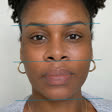 Example: 87/100 AI-generated face · see its full report
Drop a selfie here
Face the camera, arm's length away, even light, hair off the face.
Loading the face model (first time only)…
Tap a part to see its lines.
Measured from this photo's geometry, not a judgement of you. A second photo of the same face usually reads a little differently.
Your full report
Biggest opportunity:



One-time payment. No subscription. 7-day refund if the report fails or is clearly wrong. See a full sample report
This is the sample face. See its full report, or test your own photo to unlock yours.
Why it scored this way
What to do about it
LockedWhat's in the full report
- OverviewOne-line verdict, your three strongest and three weakest measures, and a radar chart.
- ProportionsThirds, fifths, face length to width and symmetry, each placed against the typical range.
- Eyes and browsCanthal tilt, eye spacing, openness, and brow position.
- Nose and midfaceThe front-view ratios we can measure, and what a front photo can't show.
- Lips and jawLip balance, mouth width, jaw to cheekbone width, chin.
- SkinWhat the photo shows about surface tone, shine and under-eye shadow. Appearance only, never a diagnosis.
- Face shape and hairYour face shape, six haircuts that suit it, AI pictures of you with three of them, glasses frames, and beard styles for men.
- ColoursWarm or cool colouring and the clothing colours that suit it.
- Your planFive to eight changes ranked by cost, effort and how soon they show, with why the first one comes first.
How we measure symmetry
After levelling the head, we find your facial midline from 22 points running down the centre of the face (forehead, nose bridge, nose, lips, chin). Then we mirror each of 26 right-side points (eye corners, brows, nostrils, mouth corners, cheekbones, jaw) across that line and measure how far it lands from its left-side twin, as a share of face width. The average of those 26 gaps is your left-right difference. We also compare the tilt of the two eyes.
The score compares both numbers with our reference faces. Being more asymmetric than typical lowers it; being more symmetric than typical never costs points. Symmetry is 30% of the overall attractiveness test, its largest part.
What's typical
In our 45 AI-generated reference faces the left-right difference averaged 1.6% of face width, ranging from 0.5% to 3.4%. Every face is a little asymmetric, including faces people rate as very attractive. A real selfie with a slightly turned head can easily read 2–3%.
What moves the result
- A turned head is the biggest one. We undo most of it, and warn when the head is turned more than 10°.
- Expression: a lopsided smile or a raised brow adds asymmetry that isn't in the bone structure. Use a neutral face.
- Lens distance: close-ups exaggerate whatever is nearest the camera.
- Hair over one side can move the cheek and jaw points.
- A mirrored selfie scores nearly the same; the face model fits a flipped photo very slightly differently.
Photo tips
- Camera at eye level, at least an arm's length away. Close-up selfies make the nose look larger and the face narrower.
- Face the lens straight on with a neutral expression and your mouth closed.
- Soft, even light from the front; hair pulled away from the forehead, cheeks and jaw.
- Glasses off if you can. One face in the frame, and only a photo of yourself.
The full report
This page shows one measure. The full report reads every part of your face from the same numbers, describes your skin's appearance, colouring, hair and brows from a small copy of your photo (deleted within 2 hours), shows AI pictures of you with three haircuts for your face shape, and ends with a ranked styling plan. $14.99 once, no subscription, 7-day refund if it fails or is clearly wrong. What's in the report.
Questions
How symmetrical is my face?
Upload a straight-on selfie. You get a symmetry score out of 100, the average left-right difference as a percentage of face width and the eye-tilt difference, with the midline and the 26 point pairs drawn on your photo.
What is a good facial symmetry score?
At or better than the reference average scores 100; a little more asymmetric than typical scores in the 80s or 90s. In our reference faces the left-right difference averaged 1.6% of face width; under that is more symmetrical than typical.
Is a symmetrical face more attractive?
Somewhat. A review of the research (Rhodes, 2006) found a modest positive link between natural facial symmetry and rated attractiveness, smaller than the link with averageness. That's why symmetry is 30% of our overall score, not all of it.
Is it normal to have an asymmetrical face?
Yes. Every face has left-right differences; even our 45 AI-generated reference faces ranged from 0.5% to 3.4% of face width. Mild asymmetry is normal and rarely noticed in person.
Why did my symmetry score change between two selfies?
A slight head turn, a small smile or a camera closer than arm's length all shift left-right distances, and the face model fits each photo a little differently. Keep your head square to the lens at eye level for the steadiest reading.
Why does my face look different in selfies than in the mirror?
The mirror shows you flipped, the way you're used to seeing yourself; most cameras save the unflipped view others see. Small asymmetries look bigger when flipped from what you're used to. The measurement is the same either way.
Can I make my face more symmetrical?
In photos: face the camera squarely, keep the camera centred at eye level and the expression relaxed. Grooming helps how it reads, for example evening out brow shapes or choosing a parting that balances the face. We don't give surgical or medical advice.
Is a facial symmetry tester app different?
Mirror apps flip one half of your face to show how a perfectly symmetric version would look. This test measures the actual left-right difference from 26 point pairs and tells you how it compares with typical faces.
More free face tests
- Attractiveness testOverall score and all five parts
- Canthal tilt testEye tilt in degrees, each eye
- Face shape detectorOval, round, square, heart, oblong or diamond
- Jawline ratingJaw and chin width against cheekbones
- Golden ratio face calculatorFive ratios next to 1.618
- PSL scale testYour score on a 1–8 scale